
Architecture
Voyalier is built around one rule: untrusted input must never silently become traveler-approved truth. The codebase supports that rule with one React interface, two narrow transports, shared Rust application services, a framework-independent deterministic core, and local durable state.
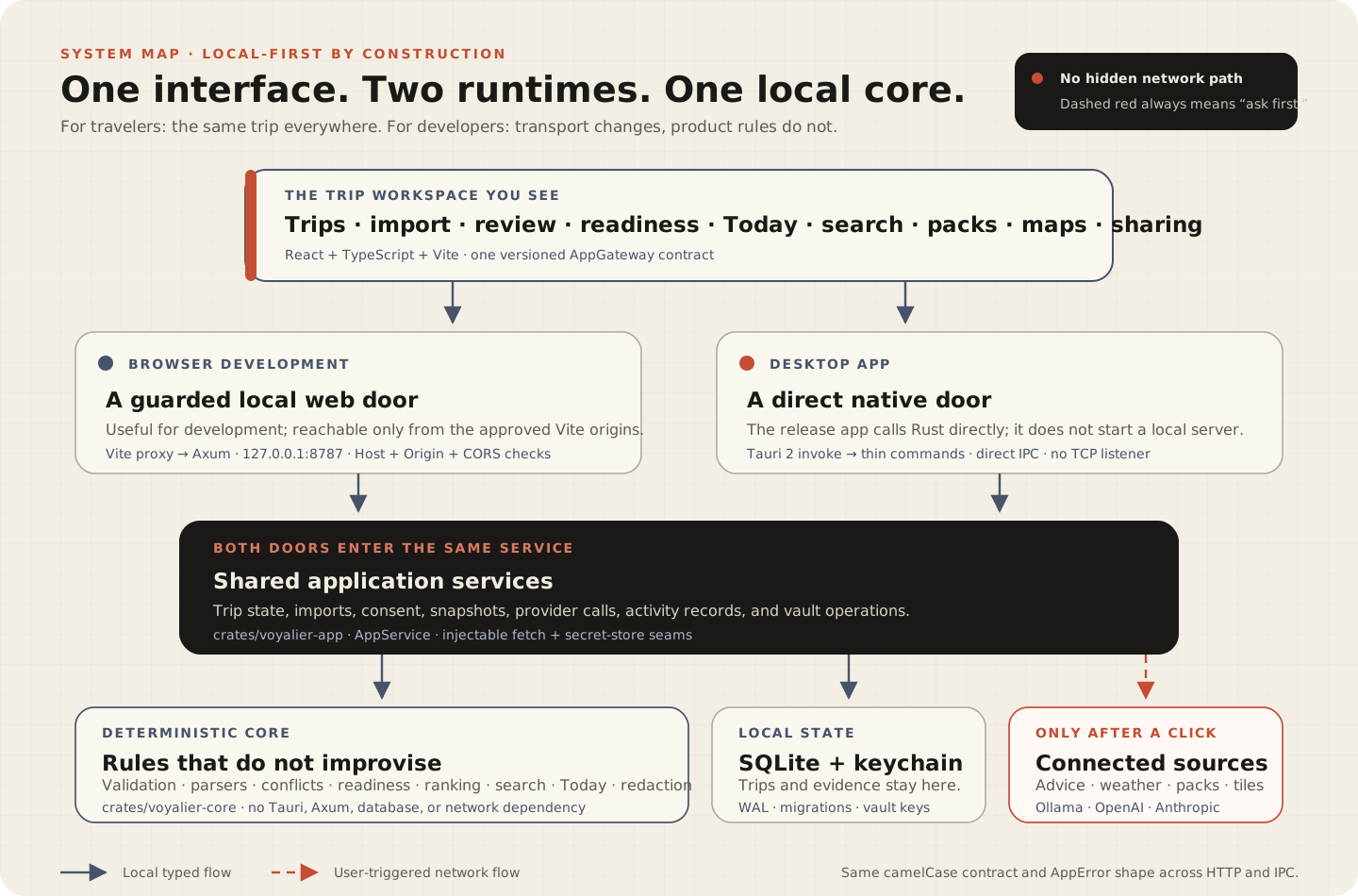
One interface, two runtimes
Section titled “One interface, two runtimes”The React app depends on the versioned AppGateway contract. It selects a
transport from the runtime instead of making product views aware of HTTP or
native IPC.
| Runtime | Path | Important boundary |
|---|---|---|
| Browser from source | Managed Chromium → direct JSON → Axum on a kernel-selected loopback port | Per-launch bearer, CORS, Host and Origin validation |
| Tauri desktop | React → typed invoke → thin native command → AppService |
direct IPC; the release app starts no TCP listener |
| Tests | React → in-memory mock gateway | deterministic fixtures with no network, keychain, or database |
Both live paths serialize the same camelCase types and the same AppError
shape. New features land across the TypeScript contract, Rust wire type,
application service, both transports, mock, and tests as one compatible change.
On compatible macOS and Linux hosts, make dev opens a disposable managed
Chromium session. Separate anonymous pipes carry the launch credential and
assigned API address; an origin-scoped in-memory bootstrap gives that session
access before the UI runs. The credential stays out of command arguments,
environment values, files, URLs, logs, cookies, and browser storage. Vite serves
the UI without an /api proxy. An arbitrary browser tab receives no API
credential. Windows users use the packaged desktop route, whose release app
starts no TCP listener.
These are source architecture claims. Verifying a downloaded installer requires the exact release artifact and installed application; source or development browser checks do not establish installed-webview behavior.
Ownership by layer
Section titled “Ownership by layer”Product surface — apps/web
Section titled “Product surface — apps/web”Owns views, interaction, accessibility, transport selection, and the consent-gated MapLibre surface. It does not decide whether extracted evidence is true and it does not hold provider keys.
Native shell — apps/desktop/src-tauri
Section titled “Native shell — apps/desktop/src-tauri”Initializes the service and maps typed Tauri commands to it. Product behavior does not live here. Desktop release builds depend on neither Axum nor a local web server.
Application services — crates/voyalier-app
Section titled “Application services — crates/voyalier-app”Owns SQLite transactions and migrations, the trip and fact lifecycle, traveler-owned planning records, workspace search, network fetch seams, downloaded packs, provider configuration, activity records, backup/restore, OS keychain access, and vault state. The production fetcher is replaceable, so the test suite never needs live endpoints.
Deterministic domain — crates/voyalier-core
Section titled “Deterministic domain — crates/voyalier-core”Owns validation, parsers, confirmed and planning-only itinerary conflicts, readiness, trip/workspace search, Today, recommendation ranking, packing, brief redaction, vault cryptography, and provider request/reply validation. It has no Tauri, Axum, database, or network dependency.
Evidence is a lifecycle
Section titled “Evidence is a lifecycle”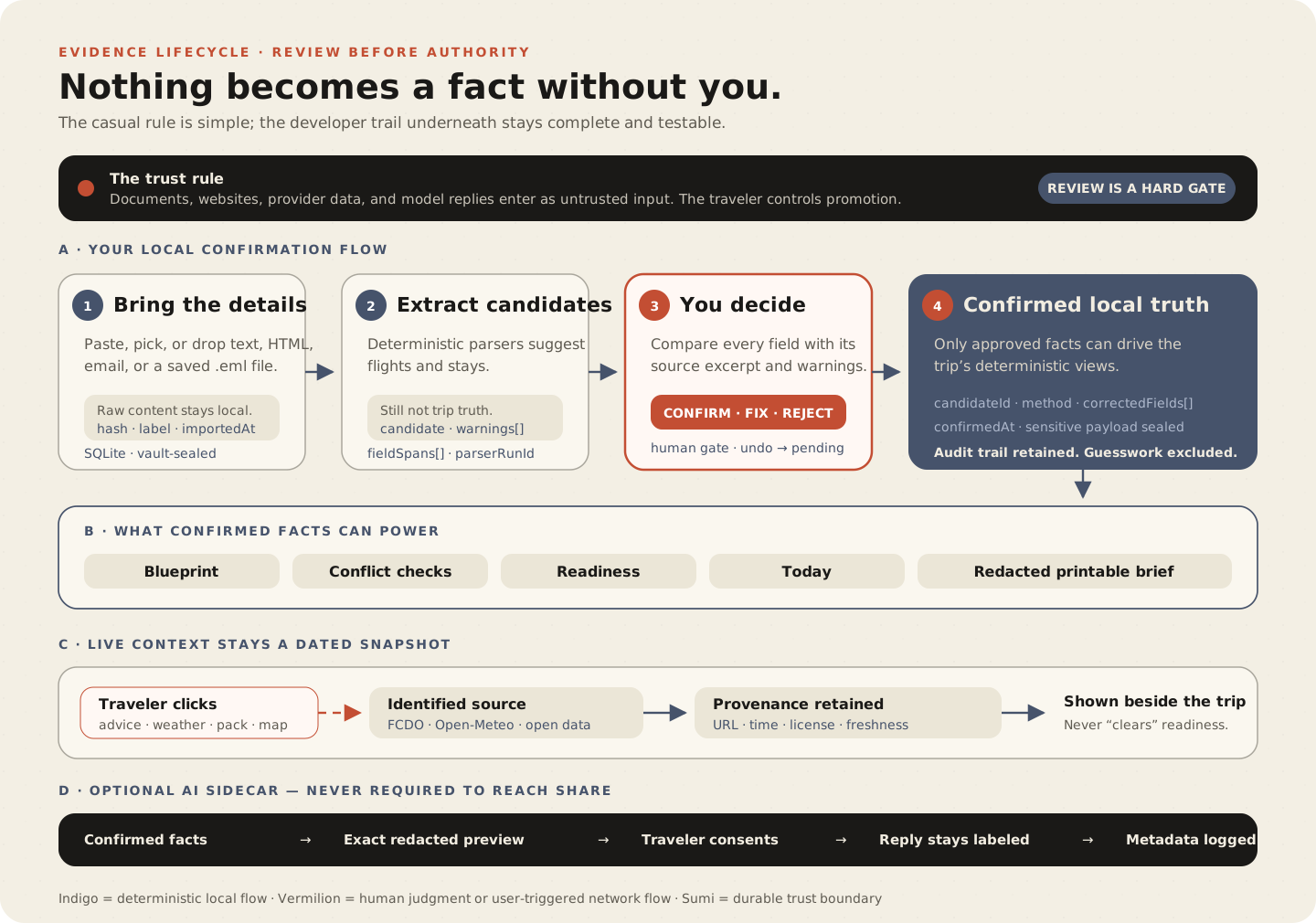
Imported confirmations
Section titled “Imported confirmations”- Voyalier validates and hashes text, HTML, or a raw confirmation email
(
.eml) supplied by paste, file picker, or drag-and-drop. Email is extracted to its best body first and never itself stored; the selected body stays only in local SQLite. - Deterministic parsers create candidate facts with a parser run, method, source spans, excerpts, and warnings.
- The traveler confirms/corrects, rejects, or leaves each candidate pending.
- Confirmed facts retain their extraction history and correction record.
- Pure rules derive conflicts, logistics readiness, Today, and the redacted brief. Search covers local source text and confirmed facts. Recommendations rank already-downloaded open place data.
Raw source bodies never appear in SourceDocument, import responses, HTTP
responses, or Tauri responses.
Retrieved evidence
Section titled “Retrieved evidence”Travel facts arrive only after an explicit action and keep enough context to be audited later.
| Surface | Source | Retained context |
|---|---|---|
| Official advice | GOV.UK FCDO | human URL, verbatim fields, source update time, device retrieval time |
| Weather | Open-Meteo | resolved place, coordinates, forecast dates, coverage, source URL, retrieval time |
| City packs | CI-built GitHub Release artifacts | Overture place data plus a separately attributed Wikivoyage layer |
| Map | MapLibre with OpenFreeMap | visible attribution; no tile request before Show map |
Stale, partial, unavailable, and unknown states stay visible. Official entry, health, and safety sources outrank commercial, editorial, community, and model content. A model can never clear a high-stakes readiness item.
Optional AI assist
Section titled “Optional AI assist”Ollama runs locally. OpenAI and Anthropic are bring-your-own-key cloud options. Cloud keys are write-only from the product contract and live in the OS keychain. Before any run, the traveler sees the endpoint, exact redacted payload, withheld fields, grounding count, and token estimate. Names and confirmation codes are excluded by construction, and completed calls appear in the activity log.
Trip chat is a separate surface on the same machinery, and it is on-device only: grounding comes from the trip’s own confirmed facts, documents, and saved resources via the same deterministic search, names and confirmation codes are withheld from the local model too, and transcripts stay out of search, the brief, and exports. Cloud providers are excluded from it by construction rather than by configuration, because a multi-turn exchange cannot be previewed request by request.
The reply is assistance, not authority: it cannot originate visa, safety, health, price, availability, or opening-hour claims.
How that architecture feels in the app
Section titled “How that architecture feels in the app”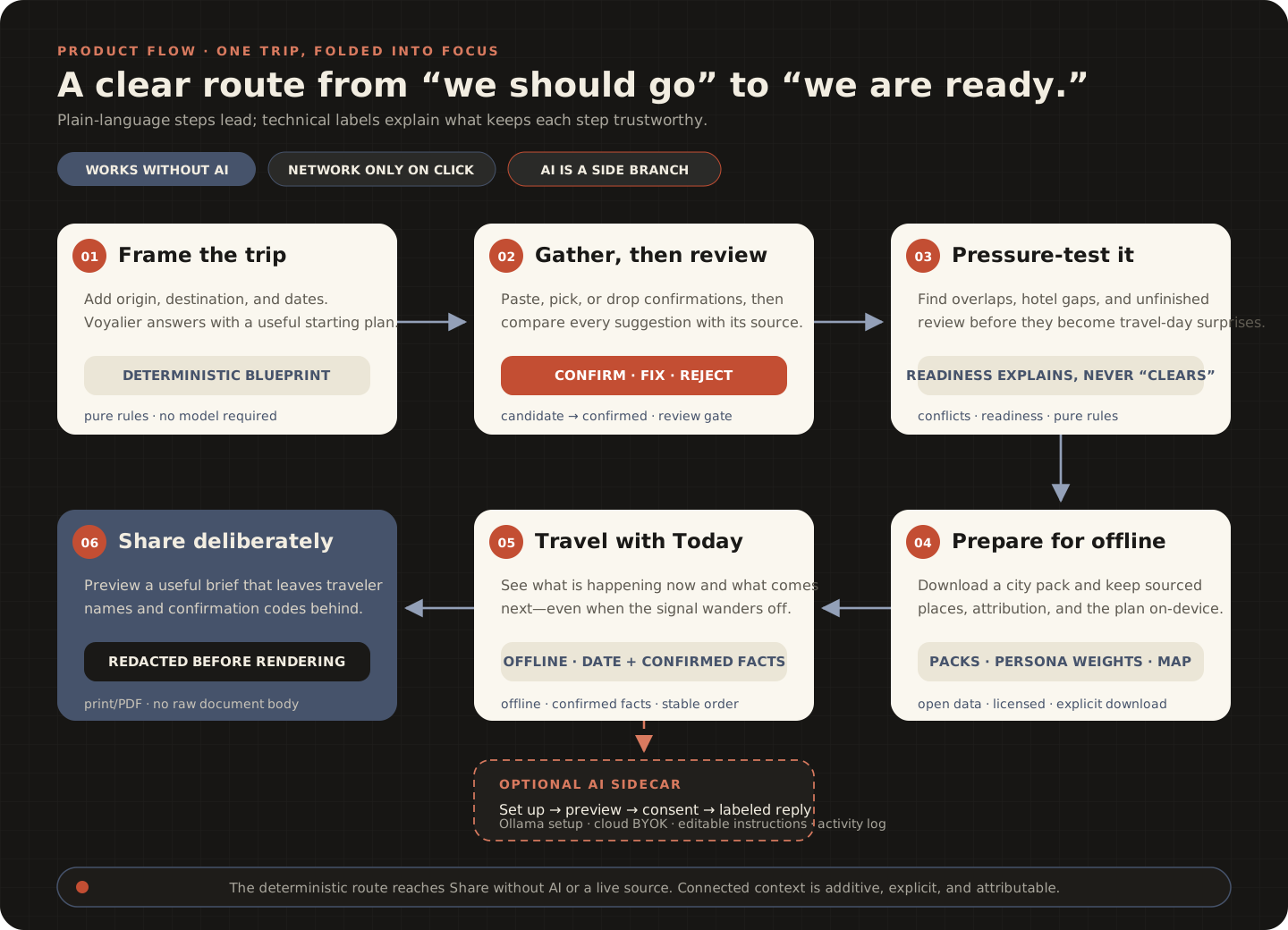
The offline baseline includes saved trips, confirmed facts, traveler-owned saved places/checklists/manual plans, Blueprint, conflicts, readiness, workspace search, Today, and the printable brief. Network access adds dated evidence and packs; optional AI adds a drafting surface. Neither replaces the local trip operating layer.
Local persistence and vault
Section titled “Local persistence and vault”Persistent state lives in an OS-appropriate application-data directory, never inside the app bundle. SQLite runs with WAL, foreign keys, a busy timeout, and versioned migrations.
Raw imported content, sensitive confirmed-fact payloads, trip notes, saved-place notes, checklist labels, and manual-plan text are sealed when a recoverable data key is available. The OS keychain stores that data key and BYOK provider keys. A traveler can add a passphrase, which wraps the vault key and causes the workspace to open locked until that passphrase is supplied.
The vault intentionally has an inactive state for keychain-less CI or embedding contexts: Voyalier will not encrypt with an ephemeral key that would make the database unreadable after restart.
Network inventory
Section titled “Network inventory”Every current remote edge is explicit and attributable:
- GOV.UK FCDO advice and Open-Meteo weather through the replaceable Rust fetcher.
- GitHub Release downloads for traveler-selected city packs.
- The in-app updater, after opt-in: a once-a-day release-metadata check plus the
signed update download over
github.comandobjects.githubusercontent.com, run entirely in the Rust core. - OpenFreeMap tiles after the traveler selects Show map, and the address of a saved research resource, only once the traveler has enabled page-detail fetching and then asked for that resource.
- Localhost Ollama, or consented BYOK OpenAI/Anthropic inference after preview. Trip chat is Ollama-only and has no cloud path at all.
There is no telemetry, shared provider key, autonomous booking, live inventory aggregation, background scraping, or silent document upload.
Current limits
Section titled “Current limits”- Unavailable secret storage retains the legacy plaintext fallback for sensitive records; PDF/image imports require an active recoverable key. Sealed records still need their matching key or protected wrap. Local safety copies preserve historical bytes, so adding a passphrase cannot retroactively encrypt any plaintext already in an old copy. Automatic retention preserves unavailable historical copies; explicit Clear backups removes owned copies after checking their recorded hashes. Portable encrypted exports provide the movable backup format.
- The browser source route requires managed Chromium on a compatible Unix host; manually opened browsers do not inherit its API credential.
- English and Spanish catalogs cover catalog-backed views, while the concierge cockpit and some trip-idea controls remain English. The concierge region has an English language annotation for assistive technology. Full localization remains deferred.
- OS-signed and notarized installers still depend on paid platform certificates. The separate minisign-verified updater, checksums, and build provenance have shipped, and releases carry packaged macOS and Windows assets — but until those certificates land, a packaged build trips a one-time Gatekeeper or SmartScreen warning on first launch.
- The map uses a verified local PMTiles archive for Nashville, Kyoto, Tokyo, or Paris when downloaded; other pack cities use consent-gated OpenFreeMap until a bounded extract is enabled.
- Voyalier shows sources and uncertainty but does not claim legal, medical, safety, pricing, availability, or opening-hours authority.
The detailed decision trail lives in the repository’s
docs/architecture
directory, including the desktop transport ADR, the Phase 2 contract ADR, and
the map source policy.